
Our clinicians can discuss the trade-offs of a recovery-and-metabolism combination if you’re investigating options, refer to our page on CJC-1295/Ipamorelin therapy for more information. Some protocols combine MOTS-c, which focuses on metabolism, with CJC-1295/Ipamorelin, which influences the growth-hormone axis for recovery and body composition. Although they are theoretically complementary (both remain investigational), lacking human stack data, and the uncertainty of combining two experimental peptides increases. Discussions surrounding SS-31 (elamipretide) often include MOTS-c due to their divergent mechanisms affecting mitochondria — while MOTS-c activates AMPK signaling, SS-31 stabilizes the inner mitochondrial membrane. MOTS-c is often mentioned together with other peptides in combination therapies or „stacks. The practice of stacking amplifies both the potential advantages and risks — and it should only be orchestrated by a clinician. It is typical to experience minor redness, itching, or a small bruise, which usually resolves within one to two days.
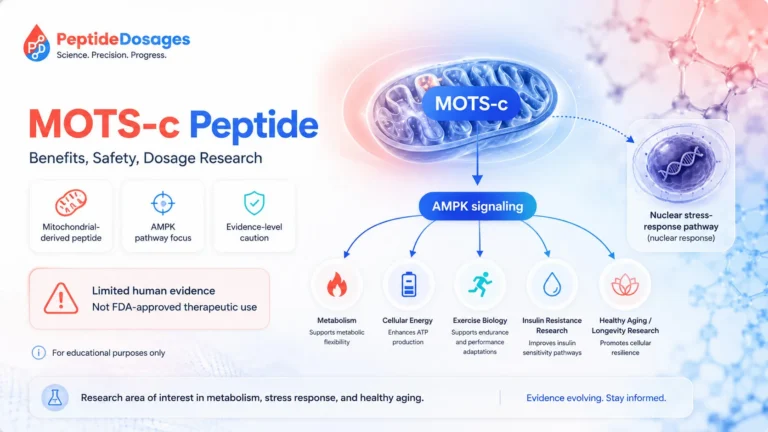
For researchers focused specifically on cellular aging and longevity (reviewing comparative information on telomere-linked longevity peptides may clarify how MOTS-c’s mitochondrial mechanism conceptually contrasts with nuclear), telomere-linked longevity research peptides. Given that MOTS-c is a mitochondrially encoded peptide known for its nuclear-signaling activity, it naturally attracts the attention of researchers exploring the regulation of MDPs in relation to UPRmt-linked stress signaling. In various research models (MOTS-c has been identified as an AMPK signaling activator), placing it conceptually among a small group of other peptides and small molecules being studied for their engagement with this energy-sensing pathway.
At 5 mg per mL, anything above 5 mg no longer fits inside a single 1 mL syringe, so a 7.5 mg amount becomes two draws and a 10 mg amount empties the vial across two. It does not hold up for a month the way sturdier compounds do.
More milligrams does not reliably produce more effect with this compound (and the dose-related side effects sit at the top of the range), not the bottom. Escalation without cause is the most common protocol error described in the literature and in user reports. That lower range is user-reported, not from a trial.
Data on human dosing is exceedingly limited; only a few preliminary human studies have examined total doses within the range of 5 to 10 mg, and these findings do not represent validated clinical protocols. Currently, there is no recognized optimal cycling protocol for humans. The reasoning behind cycling differs from that of metformin (a pharmaceutical cousin of MOTS-c), which is administered continuously. Reports often indicate enhanced carbohydrate tolerance and diminished energy crashes after meals. Although both are investigated within overlapping mitochondrial and cellular-energy research areas (MOTS-c is a signaling peptide originating from mitochondrial DNA with a reported AMPK/nuclear-signaling mechanism), while NAD+ precursor research, including studies on NAD+ itself, focuses on coenzyme availability for a wide array of NAD+-dependent enzymes. Two prevalent comparative inquiries researchers pose regarding MOTS-c pertain to its relationship with NAD+-pathway research and 5-Amino-1MQ.
Their Certificates of Analysis (COAs) are specific to each batch and made publicly available, which is the standard that researchers should expect from any supplier. The complete protocol as outlined above consists of retatrutide administered in titrated doses combined with MOTS-c at 5 mg — three times per week. Not every research scenario necessitates the maximum intensity use of the full retatrutide plus MOTS-c combination. By acting on AMPK (the same energy sensor that metformin influences), incorporating MOTS-c with retatrutide during a significant calorie deficit is a feasible approach for managing lows.

The study on „Exercise Mimetic
What exists are extrapolations from research doses used in studies — adjusted for human body weight, and protocols developed by compounding pharmacies and clinical practices working in the longevity space. More recently, researchers have shown that MOTS-C can enter the nucleus and directly regulate gene expression, essentially acting like a hormone as well as a signaling peptide. This triggers glucose uptake independent of insulin, which is a big deal for anyone with insulin resistance or metabolic dysfunction. MOTS-C (Mitochondrial Open Reading Frame of the 12S rRNA type-C) was first identified in 2015 by researchers at USC — specifically by Pinchas Cohen’s lab, which has become one of the leading groups in mitochondrial peptide research.
Decide whether you actually need more
Animal studies show improved endurance, enhanced fat oxidation, and better glucose metabolism in MOTS-C-treated subjects. MOTS-C is frequently described as an exercise mimetic because it activates AMPK and several other metabolic pathways that are engaged during physical exercise. Some longevity researchers hypothesize that restoring MOTS-C levels may slow aspects of metabolic aging — though human clinical data is still limited. It acts as a metabolic regulator and is often called an exercise mimetic because it activates pathways similar to physical exercise. MOTS-C was only discovered in 2015; long-term safety data in humans is still being established. Injection site discomfort or rednessMild nauseaTemporary flushing or warmthHeadache , uncommon,
MOTS-c works by activating AMPK — the same broad territory metformin operates in — and by increasing glucose uptake into muscle. If you take metformin (insulin), or a sulfonylurea. The analog trial found its 25 mg dose well tolerated over four weeks in twenty people — with injection-site reactions the notable issue, and that is the entirety of the controlled human safety record for anything in this class. The schedule people follow was inherited from a mouse study; the amount was not. Whether the common dose reflects sensible caution or is simply too low to do anything is not known.
Other AMPK-active compounds and stimulants should be reviewed with a prescriber. The most clinically relevant interaction concern is with glucose-lowering agents (insulin — sulfonylureas, GLP-1 medications, metformin), where additive effects on blood sugar are plausible. That said (the long-term safety of MOTS-c in humans is genuinely unknown), and reported side effects come largely from clinical use and self-report rather than large trials. First (receptor and signaling systems can adapt to constant stimulation; intermittent exposure is a hedge against diminishing returns), though this has not been formally quantified for MOTS-c in humans. For multi-day-per-week schedules, spacing doses evenly (for example, Monday/Wednesday/Friday, or five weekday mornings) helps maintain steady exposure. Plain sterile water contains no preservative and is intended for single use; a vial mixed with it should be used immediately and discarded, making it impractical for a multi-dose peptide.

Some people do well at 10mg, but 5mg is often cleaner and easier to tolerate. The common pattern is 2-3 injections per week, which is usually enough for a structured cycle. If a compound is underdosed — mishandled, or unstable, people often blame the peptide instead of the source. MOTS-c can feel subtle, so objective markers matter more than vibes. Abdomen (lower belly), or thigh are common options. The process is straightforward, but peptide handling errors are common, and most of them are avoidable.
But it’s something to keep in mind, especially since our known providers warn that people with an active cancer diagnosis should avoid MOTS-c unless otherwise recommended by their doctor. In July 2026 (MOTS-c was among six peptides on which an FDA advisory panel voted to lift restrictions), so it’s possible that the near future will see additional studies examining its effects in humans. The findings aren’t dissimilar to a 2023 study in humans — which found that a higher serum MOTS-c concentration correlated with “greater muscle mass, force, and power generated during jumping” in healthy subjects.22